
Blog · Sep 12, 2026 · 8 min read
Understanding Adaptor Signature Swaps in the btcmixer_en Ecosystem: A Comprehensive Guide
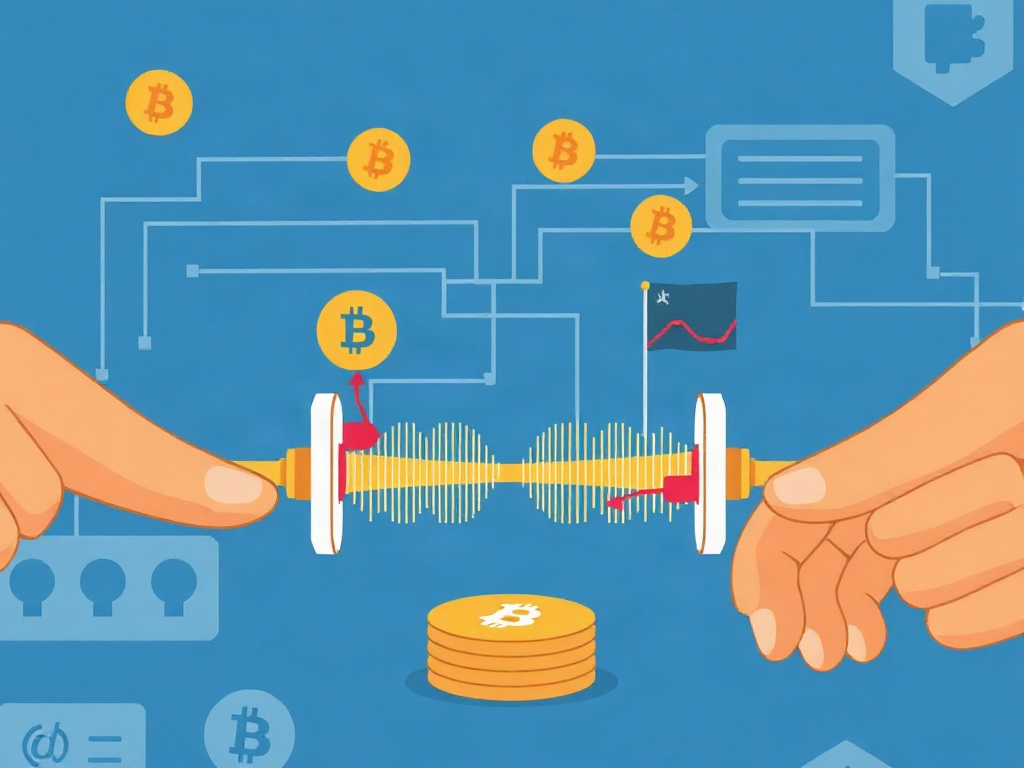
Understanding Adaptor Signature Swaps in the btcmixer_en Ecosystem: A Comprehensive Guide
In the rapidly evolving landscape of cryptographic protocols and privacy-preserving technologies, adaptor signature swaps have emerged as a pivotal mechanism enabling atomic swaps, cross-chain interoperability, and enhanced transaction privacy. Within the btcmixer_en niche, these constructs are not merely theoretical—they are actively shaping how users interact with decentralized mixing services, ensuring both security and anonymity. This article dives deep into the mechanics, applications, and best practices surrounding adaptor signature swaps, providing a roadmap for developers, researchers, and enthusiasts alike.
The Foundations of Adaptor Signature Swaps
At its core, an adaptor signature swap is a cryptographic primitive that allows one party to "adapt" a standard signature into a new form that reveals a secret upon execution. This transformation is conditional: the signature only becomes valid if the counterparty provides a specific piece of information, typically a preimage or a secret key. In the context of btcmixer_en, this mechanism underpins many privacy-enhancing protocols, allowing users to swap assets or states without exposing their identities on the public ledger.
How Adaptor Signatures Work
The mathematical foundation relies on elliptic curve cryptography and the concept of signature aggregation. A typical adaptor signature begins with a standard Schnorr or ECDSA-style signature. The signer modifies the signature by incorporating a "trapdoor" value. Once the counterparty supplies the secret, the trapdoor can be removed, yielding a valid signature that proves the original condition was met. This process is deterministic, verifiable, and—crucially—non-interactive in many implementations, making it ideal for integration into automated mixing workflows within btcmixer_en.
Key Properties
- Conditional Validity: The signature holds no value until the agreed-upon secret is revealed.
- Verifiability: Anyone can verify the signature's structure without learning the secret.
- Atomicity: Either the entire swap completes, or none of it does, eliminating partial-exposure risks.
- Privacy Preservation: The secret remains hidden until the exact moment of execution, preserving user anonymity.
Technical Mechanics Behind Adaptor Signature Swaps
Understanding the inner workings of adaptor signature swaps requires a look at the step-by-step protocol flow. In a typical btcmixer_en scenario, Alice wishes to swap a UTXO with Bob using a hash-locked contract. The adaptor signature serves as the cryptographic glue that binds the swap's success to the disclosure of a preimage.
Step-by-Step Protocol Flow
- Setup: Alice generates a random secret
sand computes its hashH(s). This hash becomes the lock condition for the transaction. - Signature Adaptation: Alice creates an adaptor signature on her transaction output. The signature includes the hash
H(s)as part of the signing message, but the actual signature valueσis mathematically tied tos. - Exchange: Alice shares the adapted signature with Bob. At this stage, Bob cannot spend the output because
sis unknown. - Preimage Disclosure: Bob obtains
s(perhaps via a zero-knowledge proof or direct exchange) and provides it to Alice. - Signature Unblinding: Alice uses
sto "unblind" the adaptor signature, producing a standard, valid signature that can be broadcast to the network. - Broadcast and Settlement: The transaction is broadcast, the lock is released, and the assets are transferred atomically.
Security Considerations
Security in adaptor signature swaps hinges on the hardness of the underlying cryptographic problems and the correctness of the implementation. A malformed adaptor signature can lead to fund loss or failed swaps. Within the btcmixer_en community, auditors emphasize the importance of using well-vetted libraries, avoiding roll-your-own cryptography, and ensuring that the secret s is truly random and kept confidential until the moment of disclosure. Additionally, replay attacks must be mitigated by incorporating unique nonce values or transaction identifiers into the signing process.
Benefits and Use Cases in btcmixer_en
The integration of adaptor signature swaps into btcmixer_en platforms opens a spectrum of benefits, ranging from improved privacy to reduced counterparty risk. Below, we explore the most compelling use cases.
Atomic Cross-Chain Swaps
One of the most prominent applications is atomic cross-chain swaps. Traditionally, cross-chain trades required trusted intermediaries or complex multi-signature schemes. With adaptor signature swaps, Alice can swap Bitcoin for Ethereum-based tokens trustlessly. The swap is atomic: if Alice doesn't receive her Ethereum, she automatically recovers her Bitcoin, and vice versa. This capability is particularly valuable for btcmixer_en users who wish to diversify holdings without exposing their mixing patterns.
Privacy-Preserving Payment Channels
Payment channels, such as those used in the Lightning Network, benefit significantly from adaptor signature swaps. By using these cryptographic primitives, channel participants can update channel states without broadcasting every intermediate step to the blockchain. When a channel is closed, the final state is settled atomically, and the adaptor signature ensures that cheating or premature closure attempts are cryptographically impossible. This results in higher throughput, lower fees, and enhanced privacy for users routing payments through mixing services.
Decentralized Exchange (DEX) Integration
Decentralized exchanges can leverage adaptor signature swaps to offer trustless asset swaps directly from user wallets. Instead of depositing funds into a centralized order book, users interact via smart contracts that employ adaptor signatures to enforce swap conditions. For the btcmixer_en niche, this means DEX trades can be seamlessly integrated with mixing protocols, allowing users to swap and mix in a single workflow, thereby maximizing privacy without sacrificing liquidity or speed.
Common Pitfalls and How to Avoid Them
Despite their power, adaptor signature swaps are prone to implementation errors that can compromise security or usability. This section highlights the most frequent mistakes and provides practical guidance for developers working within the btcmixer_en ecosystem.
Mistake 1: Improper Secret Management
The secret s must be generated securely and stored safely until it is needed. A common error is exposing the secret prematurely or using weak random number generators. In btcmixer_en implementations, developers should leverage hardware security modules (HSMs) or vetted cryptographic libraries that provide constant-time operations and secure key storage.
Mistake 2: Neglecting Replay Protection
Without proper nonce incorporation, an adaptor signature could be replayed across different transactions, leading to unexpected fund movements. Each swap instance should include a unique identifier—such as a transaction hash, timestamp, or random salt—to ensure that old signatures cannot be reused. This is especially critical in high-frequency trading environments within btcmixer_en.
Mistake 3: Inadequate Signature Verification
Some implementations skip thorough verification of the adaptor signature's structure before proceeding with the swap. This can allow malformed signatures to pass through, potentially causing denial-of-service attacks or fund loss. Always validate the signature against the expected public key and hash lock before exchanging any assets.
Mistake 4: Overlooking Network Consensus Rules
Adaptor signature swaps must comply with the consensus rules of the underlying blockchain. A signature that is valid off-chain may be rejected by the network if it doesn't adhere to format requirements or size limits. Developers should test their implementations against testnets and mainnet-compatible parameters to avoid costly deployments failures.
Future Trends and Best Practices
As the btcmixer_en niche continues to mature, adaptor signature swaps are poised to play an even more central role. Emerging research focuses on zero-knowledge adaptations, where the secret disclosure can be proven without actually revealing the value, further enhancing privacy. Additionally, layer-2 scaling solutions are exploring adaptor signature integrations to enable instant, low-cost swaps that align with the ethos of decentralized finance.
Best Practice 1: Use Audited Libraries
Never implement adaptor signature cryptography from scratch. Instead, rely on libraries that have undergone rigorous security audits, such as those maintained by the Bitcoin Core community or open-source cryptography projects. This reduces the risk of subtle bugs that could undermine swap security.
Best Practice 2: Comprehensive Testing Regimes
Deploy testnets, fuzz testing, and formal verification where possible. Simulate edge cases—such as network delays, malicious counterparties, and concurrent swaps—to ensure your implementation handles real-world conditions gracefully.
Best Practice 3: Transparent Documentation
For the btcmixer_en community to build on your work, clear documentation of the adaptor signature parameters, expected inputs, and error handling procedures is essential. Well-documented protocols lower the barrier to entry for other developers and foster broader adoption.
Best Practice 4: Privacy-by-Design
Integrate adaptor signature swaps within a broader privacy framework. This includes mixing the swapped assets post-swap, using confidential transaction values, and avoiding address reuse. The goal is to ensure that the cryptographic benefits of adaptor signatures translate into tangible privacy gains for end users.
Best Practice 5: Stay Updated with Protocol Changes
Blockchain protocols evolve. Soft forks, changes to signature algorithms, and new opcode additions can impact how adaptor signature swaps function. Subscribe to developer mailing lists, participate in governance discussions, and regularly audit your code against the latest protocol specifications.
In conclusion, adaptor signature swaps represent a sophisticated yet accessible cryptographic tool that can dramatically enhance the functionality, security, and privacy of transactions within the btcmixer_en ecosystem. By understanding their mechanics, recognizing common pitfalls, and adhering to best practices, developers and users alike can harness these primitives to build more resilient and anonymous decentralized systems. As the technology matures, we can expect adaptor signature swaps to become a cornerstone of privacy-preserving finance, enabling trustless interactions without compromising user security or discretion.
- Adaptor signature swaps facilitate atomic, trustless asset exchanges.
- They rely on conditional signature adaptation, revealing secrets only upon successful swap completion.
- Integration within btcmixer_en enhances privacy-preserving cross-chain swaps and payment channels.
- Developers must prioritize secure secret management, replay protection, and thorough verification.
- Future advancements promise zero-knowledge adaptations and deeper layer-2 integrations.
Whether you are a seasoned cryptographer or a newcomer to the btcmixer_en space, mastering adaptor signature swaps opens doors to a new paradigm of decentralized interaction—one where privacy, atomicity, and trustlessness coexist harmoniously. Keep exploring, stay secure, and let the protocols work in your favor.

Robert Hayes
DeFi & Web3 Analyst
adaptor signature swaps and Their Growing Role in DeFi Infrastructure
As a technology researcher deeply embedded in the decentralized finance ecosystem, I've watched the evolution of swap mechanisms with keen interest. Adaptor signature swaps represent a nuanced advancement in how liquidity is routed and how cryptographic proofs are constructed across cross-chain and layer-2 environments. Unlike traditional atomic swaps that rely on pre-images and hash time-locked contracts, adaptor signature swaps embed the necessary conditions directly into the signature itself, reducing the number of on-chain steps and minimizing exposure to front-running or partial-failure states.
From a practical standpoint, the efficiency gains are tangible. In yield farming strategies where capital efficiency is paramount, adaptor signature swaps can compress multi-hop exchanges into fewer transactions, thereby lowering gas costs and improving the risk-adjusted return profile for LPs. Moreover, the modular nature of adaptor signatures aligns well with the modular wallet architectures and intent-based protocols currently gaining traction in Web3, suggesting that this isn't merely a technical curiosity but a building block for more sophisticated DeFi primitives.
Looking ahead, I believe the widespread adoption of adaptor signature swaps will depend on developer tooling and audit maturity. As with any cryptographic innovation, the devil is in the implementation details—particularly around replay protection and cross-chain compatibility. However, for analysts and portfolio managers like myself, keeping a pulse on these mechanics is essential. They signal a shift toward more composable, low-friction transaction flows that could redefine how we think about slippage, capital efficiency, and risk management in the next generation of decentralized exchanges.